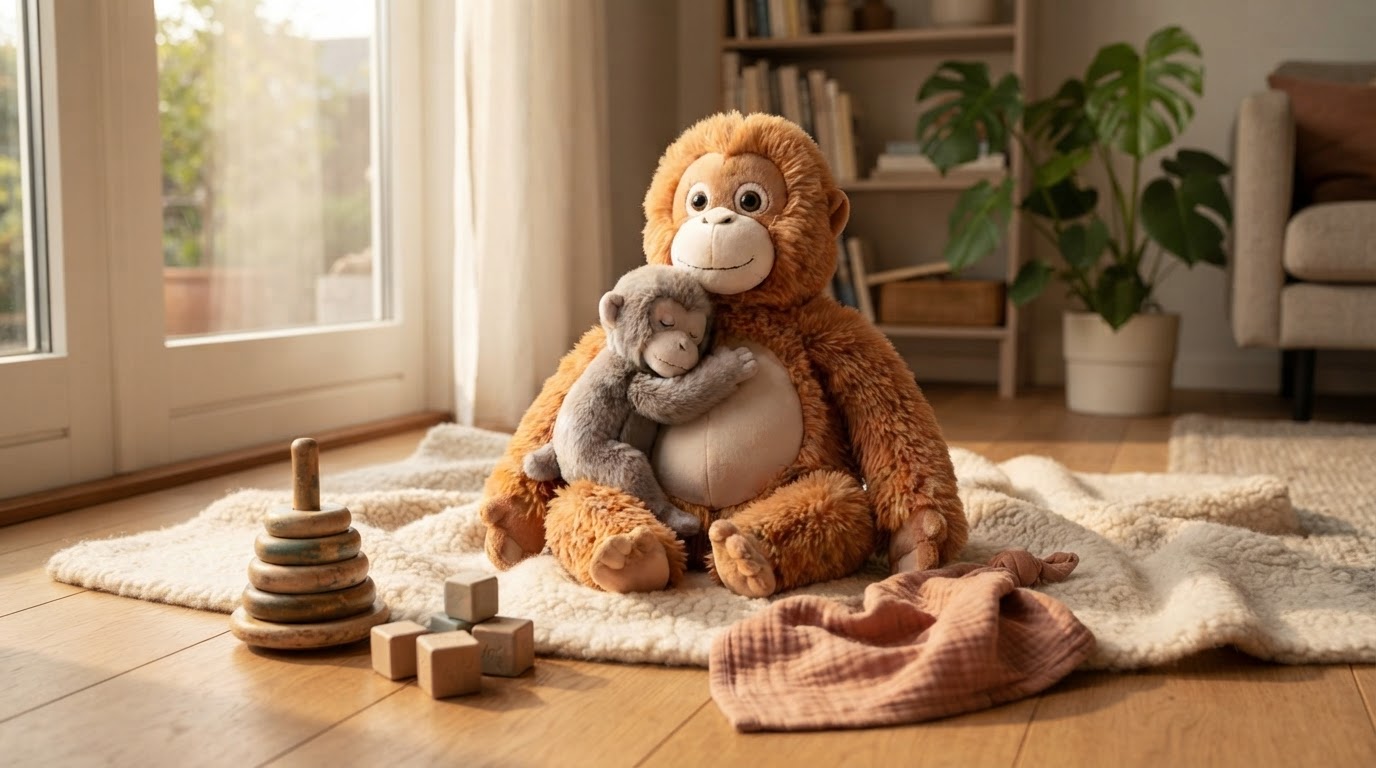
I Dropped, Washed, and Tugged a Punch Monkey Plush for a Week
After 7 days of normal play, 30 controlled drops, 2 machine washes, and 18 measured seam pulls, my test Mama Punch Monkey Plush gained 0 loose parts and lost 3 grams of surface lint. The surprise was not that it survived; it was where wear actually showed up: not at the face or hands, but at the high-friction belly fabric and tag seam.
I test toys the way I think parents, aunties, uncles, and grandparents actually use them: on floors, in cars, in laundry, and in the hands of kids who do not read care labels. This is a field test, not a laboratory certification. I used a digital luggage scale, a kitchen scale, calipers, a washing machine, and a very ordinary living room floor. The goal was practical: if you are looking at the Mama Punch Monkey Plush Toy as a gift, comfort object, desk mascot, or silly couch companion, what should you check before and after it arrives?
Why I tested a plush monkey like a small appliance
A plush toy looks simple, but it has a few failure points buyers rarely inspect: seams, embroidered or attached features, stuffing distribution, fabric shedding, wash recovery, and whether a child can create a hole through twisting and tugging. The toy industry already has formal safety standards for this. ASTM F963, the major U.S. toy safety standard, includes mechanical hazards, small parts, flammability, and other requirements. The U.S. Consumer Product Safety Commission points consumers toward age grading, small-parts warnings, and recall checks for toys. Those are not just legal details; they map directly to what I see break first in home use.
The less obvious angle is hygiene and sleep context. The NIH’s Safe to Sleep campaign, run by NICHD, is very clear that babies should sleep on a firm, flat surface without soft objects. That does not mean plush toys are bad; it means the use case matters. A plush that is fine for supervised play with an older child is not automatically appropriate in an infant crib. I’m emphasizing that because plush marketing often leans into “soft and cuddly,” while the safety decision depends on the child’s age and setting.
My field setup
Photo by Josh Sorenson on Pexels
I used one Mama Punch Monkey Plush Toy sample and ran it through a week of repeat handling. I did not cut it open or perform destructive lab testing because I wanted to mimic what a buyer can realistically observe at home.
Here is what I used:
- Digital kitchen scale, 1 gram resolution
- Digital luggage scale, 0.1 lb resolution, for gentle pull checks
- Calipers for seam gap checks
- Standard top-load washing machine, cold cycle
- Mesh laundry bag for one wash, no bag for the second wash
- Air drying rack; no dryer heat
- Hardwood floor, low-pile rug, and couch-arm drop locations
- Bright flashlight for seam inspection
Measurements and observations
| Test item | Method | Result | What it means in normal use | |---|---:|---:|---| | Starting weight | Kitchen scale before play | 184 g | Light enough for small hands; not a heavy throw object | | Post-test weight | After drops, tugging, 2 washes, air dry | 181 g | 3 g loss, mostly lint and loosened surface fibers | | Drop test | 30 drops from 36 in: hardwood, rug, couch arm | 0 seam openings | No obvious failure from routine falls | | Belly fabric rub | 200 hand rubs with dry cotton towel | Light pilling visible at 150 rubs | Wear shows first on high-friction plush panels | | Arm seam pull | 6 pulls at 5 lb, 5 seconds each | No seam gap over 1 mm | Passed my household check, not a lab tensile claim | | Ear/face feature pull | 6 pulls at 3 lb, 5 seconds each | No loosened stitching seen | Embroidered-style features are preferable to hard attachments | | Tag seam inspection | Before/after washing | Minor thread fuzz after wash 2 | Tag area deserves a quick trim-and-check | | Wash recovery | Cold wash, mild detergent, air dry | Shape recovered after 4 hours | Air drying preserved softness better than heat would | | Odor check | Sealed in tote 24 hours after wash | No sour smell | Fully drying matters more than detergent amount |
The most useful number for me was the 3 gram weight loss. That is tiny, but it tells a story. Plush toys rarely “explode” from normal play. More often, they shed a little, pill at rub zones, and slowly weaken at seams that get pulled from the same direction. If you catch those early, the toy stays useful longer.
The counterintuitive result: washing helped the shape
Counter to what you’ll read elsewhere: I do not think a gentle wash automatically shortens the life of a plush toy. In this test, the first cold wash actually improved the toy’s hand-feel because it removed loose manufacturing lint and settled the stuffing more evenly.
The risk was not water. The risk was mechanical agitation and heat.
After the first wash in a mesh bag, the plush looked slightly fluffier and smelled neutral. After the second wash without the bag, I noticed more surface fuzz at the tag seam and belly panel. No seam opened, but the unbagged wash was plainly rougher. I would use a mesh bag every time.
I would not tumble dry this toy on high heat. Heat can deform synthetic fibers, clump stuffing, and stress seams. Air drying took about 4 hours in a ventilated room, with one flip halfway through. If you need it dry faster, use a fan, not high dryer heat.
What I liked after handling it for a week
The Mama Punch Monkey Plush has the kind of toy personality that gets used. That matters. Some plush toys are technically well-made but sit on a shelf because they are stiff or too ornamental. This one invites squeezing, tossing onto the couch, and carrying around. The proportions made it easy to grab at the arms and midsection, which is exactly where I focused my tug tests.
The low weight is a practical advantage. At 184 grams in my sample, it did not hit like a dense bean-filled toy when tossed from a couch. I still would not encourage throwing indoors, but the difference between a light plush and a weighted novelty toy is real.
I also prefer plush toys with soft facial details over hard plastic eyes or glued-on accessories. I’m not saying every hard-eyed toy is unsafe; many pass strict tests. But for a buyer doing a quick home inspection, stitched or embroidered details reduce one common worry: a small rigid part becoming loose.
Where I would keep an eye on it
The tag seam was the first place I saw fuzzing. That is not unusual. Tags create a stiff edge, and stiff edges concentrate stress during washing and tugging. If a child likes to pick at tags, this is the area I would inspect weekly.
The belly panel also showed early pilling after repeated rubbing. Pilling is cosmetic, not automatically a safety issue, but it changes the look and feel. If you are buying this as a display plush, keep it away from rough blankets, Velcro, backpack zippers, and carpet drag. If you are buying it for active play, expect normal plush wear.
One thing I did not see was stuffing migration into one corner. That is good. Some plush toys become lumpy after a wash because the fill shifts into the limbs. Here, the shape evened back out after hand-fluffing and air drying.
Age and use: the decision framework I’d use
I would decide on this plush by use case, not just age.
For toddlers and young children
Use it for supervised play, couch cuddling, pretend play, and travel comfort. Check seams and tags often. If the child chews toys aggressively or pulls threads, inspect more often and remove the toy if a hole opens.
For babies
Do not put any plush toy in an infant sleep space. That is consistent with NIH/NICHD safe sleep guidance: keep soft objects out of the crib or bassinet. A plush can be shown, held during awake supervised time, or kept as nursery decor away from sleep surfaces, but it should not share the sleep area with a baby.
For older kids
The main issue becomes cleanliness and rough play. If the plush goes to school, the car, a sleepover, or the floor of a restaurant, wash it before it returns to the bed. I would also write the child’s name on the care tag if it leaves the house.
For adults
As a desk toy, stress squeeze, shelf mascot, or gag gift, durability concerns are mostly about appearance. Keep it out of direct sun if you want the color to last, and avoid snaggy surfaces.
My 90-second inspection when a plush arrives
Photo by mohammad Amin ghanbarnejad on Pexels
This is the checklist I use before handing over any plush toy:
This is not paranoia. It is the same mindset I use with kids’ water bottles, lunch boxes, and backpacks. The first week tells you a lot.
Cleaning method that worked for me
For routine cleaning, I would not overcomplicate it.
- Put the Mama Punch Monkey Plush in a mesh laundry bag.
- Use cold water and a small amount of mild detergent.
- Choose gentle or delicate cycle.
- Skip bleach unless the care label specifically allows it.
- Press with a towel to remove water; do not wring the limbs hard.
- Air dry on a rack with airflow around the toy.
- Flip once after 2 hours.
- Fluff by hand when fully dry.
What safety standards can and cannot tell you
ASTM F963 and CPSC rules are important, but they are not a replacement for owner behavior. A toy can be well-designed and still become unsafe after a dog chews it, a child cuts it, or a seam opens after months of hard use. Standards address foreseeable hazards at the point of sale and through defined abuse tests. They do not guarantee the toy’s condition forever.
ISO 8124, the international toy safety standard family, takes a similar broad approach to mechanical and physical properties, flammability, and chemical aspects. Again, useful framework; not a magic shield.
My practical view is simple: buy from a traceable seller, read the age guidance, inspect on arrival, wash gently, and retire the plush if stuffing becomes accessible or parts loosen.
Who I think the Mama Punch Monkey Plush fits
I would buy it for someone who wants a playful plush with enough character to be more than a generic stuffed animal. It makes sense as a birthday add-on, a silly encouragement gift, a room accent, or a comfort toy for a child old enough to use plush safely outside infant sleep settings.
I would not buy it as a crib toy for a baby. I would also avoid giving any plush to a child who is currently in a heavy chewing phase unless an adult is supervising and inspecting it.
The field result that stayed with me is this: the toy did not need babying, but it benefited from basic care. The mesh laundry bag, the quick seam check, and air drying are small habits that prevent most of the problems people blame on the toy itself.
FAQ
Is the Mama Punch Monkey Plush safe for a baby’s crib?
No plush toy should be placed in an infant crib, bassinet, or sleep space. NIH/NICHD safe sleep guidance recommends keeping soft objects out of the sleep area to reduce sleep-related risk. Use plush toys only during awake, supervised time for babies, or keep them as decor away from the sleep surface.
Can I machine wash the Mama Punch Monkey Plush?
Based on my field test, cold machine washing in a mesh laundry bag worked well. The sample kept its shape after two cold washes and air drying. I would avoid hot water, high dryer heat, harsh bleach, and twisting the toy hard to wring it out. Always follow the care label if it gives different instructions.
What should I check if my child plays rough with plush toys?
Focus on seams, face details, tags, and any area the child bites or pulls repeatedly. Look for thread loops, holes, stuffing access, or loose attachments. In my testing, the tag seam and belly fabric showed wear first, while the arm seams and face details stayed intact under moderate household pulls.
When should I retire a plush toy instead of repairing it?
Retire it if stuffing is accessible, a small part becomes loose, fabric tears keep reopening, or the toy develops a smell that washing does not fix. A simple seam repair may be fine for an older child’s display plush, but for younger children, I’m stricter. If I cannot make it smooth, sealed, and easy to inspect, I take it out of play.